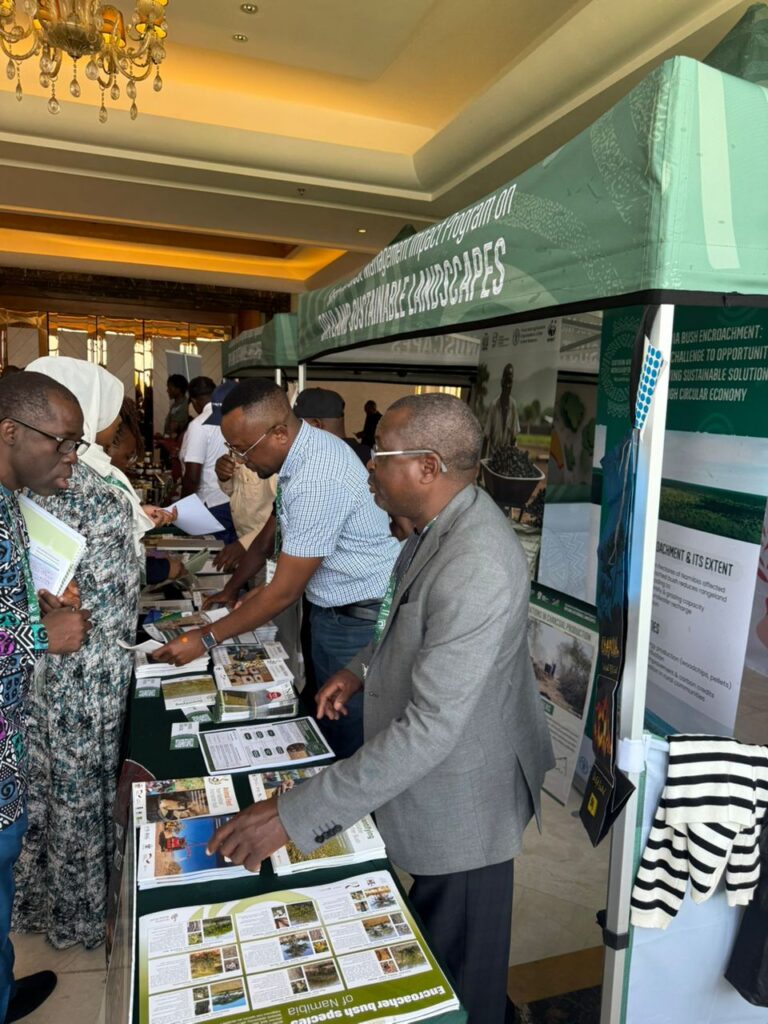
The Namibia Biomass Industry Group (N-BiG) participated in the 3rd Dryland Sustainable Landscapes Impact Program (DSL-IP) Regional Stakeholders Mechanism (REM), held in Maputo, Mozambique, from 29 September to 3 October 2025.
N-BiG was invited by the Namibia Dryland Landscapes-Impact Program- Namibia Child Project to attend and complement their participation at the event. The workshop was organized under the GEF-7 DSL-IP, a regional initiative led by the Food and Agriculture Organization (FAO) and supported by the Global Environment Facility (GEF).
Representing N-BiG, the Operations Manager Mr. Daniel Shagama attended and gave a presentation on the Namibian case, focusing on how the country’s bush-to-biomass approach contributes to land restoration, sustainable resource use, job creation, and renewable energy development.
The workshop brought together more than 100 stakeholders from across Southern Africa including government institutions, civil society, academia, and the private sector to share lessons and experiences in sustainable land management, forest conservation, biodiversity protection, and climate resilience, particularly in the Miombo-Mopane ecoregions.
For N-BiG and its members, participating in the workshop was important because it:
– Strengthened regional collaboration and knowledge exchange on managing dryland ecosystems.
– Helped promote Namibia’s biomass sector as a model for sustainable land and resource use and a response to land degradation
– Supported the goals of the Namibia Dryland Landscape Project, which focuses on restoring degraded land and improving livelihoods.
– Opened opportunities for partnerships, funding, and technical cooperation with regional and international stakeholders.
Supporting the Dryland Landscape Project objective aligns with N-BiG’s mission to promote sustainable bush control and biomass utilization as part of Namibia’s broader land restoration and Land degradation reduction, reversing and mitigation efforts.
